The CSLB exam, explained
You already know how to build. This is the part that trips people up: who qualifies, what it costs, what's actually on the two exams, and how to pass them without losing your weekends. It's the only CSLB exam guide you should need to read.
Jump to
Fees, timelines, and rules change from time to time. Confirm current figures at cslb.ca.gov before you rely on them. We never invent numbers.
Six stages stand between you and your license number. Here's the honest version of each one, in order.
You need four years of journey-level experience in your trade within the last 10 years, and you must be at least 18 with a valid Social Security number or ITIN.
File the application for your classification, name a qualifier, and pay the $450 non-refundable application fee. You can apply online through CSLB's system or by mail.
CSLB reviews your experience and eligibility. When you're approved, the testing vendor (PSI) sends you a notice to schedule. Review typically takes a few weeks.
Same day, back to back: the Law & Business exam and your trade exam. This is the part License Ladder gets you ready for.
Complete Live Scan fingerprinting for your background check, and the short open-book asbestos exam every new applicant must pass.
Post your $25,000 contractor bond, carry workers' comp if you'll have employees, and pay the initial license fee. Your number is issued and you're legal to work.
Before you pay a dime, make sure you meet the bar. CSLB checks two things hardest: your experience and your background.
You need four full years of journey-level experience in the trade you're applying for, earned within the last 10 years. Journey-level means you worked at the skill level of a fully-qualified worker, not an apprentice, so time as a journeyman, foreman, supervising employee, contractor, or owner-builder counts.
Every applicant is fingerprinted through Live Scan, and CSLB runs a state and federal background check. A record doesn't automatically disqualify you, but it can slow things down or require explanation.
CSLB issues three license types. Apply for the one that matches the work you actually do, because your exam is built around that scope.
Big infrastructure: roads, pipelines, grading, and other specialized engineering work.
Structures using two or more unrelated trades. The most common general license. (B-2 covers residential remodeling.)
More than 40 specific trades, like C-10 Electrical and C-36 Plumbing. Pick the one that fits your craft.
The license fee is the small part. Here's the honest, all-in picture, from application to active license. Every figure below is a starting estimate, so confirm current amounts with CSLB and your vendors.
Estimates only: bond premiums depend on your credit, workers' comp depends on payroll and trade, and CSLB and PSI set their own fees. Confirm every number before you budget.
The $25,000 bond protects your customers, not you. It's required to activate. Workers' comp is separate and only required once you have employees, though some classifications must carry it regardless.
Licensing as an LLC adds a separate worker bond (often $100,000) and a liability-insurance requirement. Sole owners avoid both.
California offers fee reductions and expedited processing for active-duty service members and veterans. Ask CSLB if you qualify.
Two multiple-choice exams, same day, roughly 115 questions each. Half your license is the same for everyone: Law & Business. The other half is your trade.
The half that has nothing to do with swinging a hammer, and the half most people underestimate. It's contracts, money, employees, and safety law.
This is the one you'd think is easy, until you hit the code questions and the trick wording. It tests the book version of the work you already do by feel.
Both exams are multiple choice and graded on the spot. You generally need around 72–73% to pass, but CSLB doesn't publish a fixed cutoff and the number can vary, so aim well above it. You find out pass or fail before you leave the test center.
This is the exam most tradespeople underestimate and the most common one to fail. It breaks into seven areas. Know them all, because the questions are spread across every one.
Sole owner vs. corporation vs. LLC, qualifiers (RMO/RME), license types and classifications, and the rules for keeping a license active.
Bookkeeping basics, estimating and bidding, cash flow, taxes, and the simple math of running a profitable shop.
Hiring, payroll, withholding, the 20-day new-hire report, independent contractors, and labor law.
The $25,000 contractor bond, bonds of qualifying individuals, liability insurance, and when workers' comp is mandatory.
What must be in a home-improvement contract, the down-payment cap (10% or $1,000, whichever is less), cancellation rights, and change orders.
Preliminary notices, deadlines to record a lien, releases, and how contractors and subs actually get paid.
Cal/OSHA requirements, jobsite safety, injury and illness prevention, and the prevailing-wage and certified-payroll rules that apply on public projects.
Each trade deck targets the topics that show up most on that classification's exam. Card counts are illustrative until our bank is final.
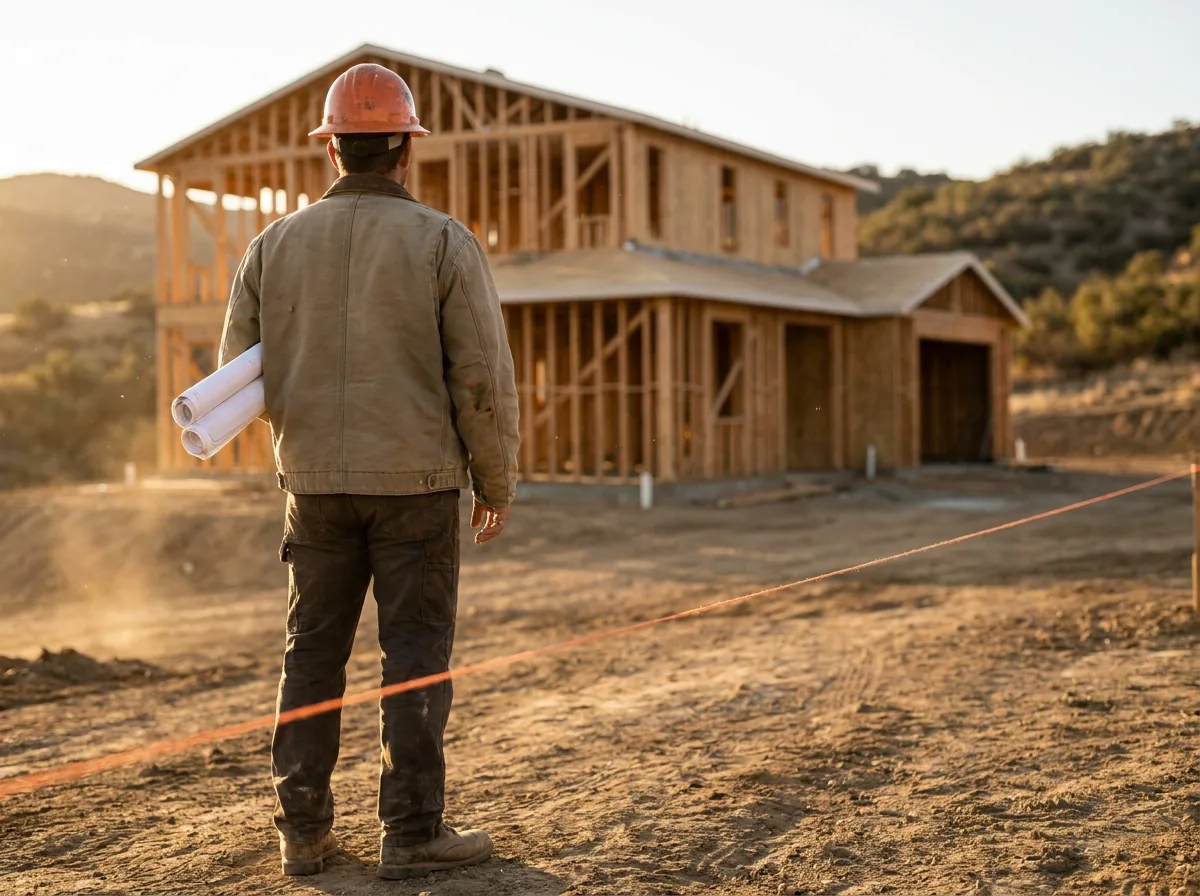
The widest license in the state, and the one most contractors reach for. A Class B lets you take on projects that involve at least two unrelated trades, framing, plumbing, electrical, finishes, and tie them together under one contract. It's also the biggest deck, because the exam can pull from a little of everything.
On the exam, expect heavy emphasis on project management, contracts, and scope: how you bid a job, schedule subs, handle change orders, and stay inside the building envelope and code. You don't need to be the expert in every trade, but you do need to know enough to run the job and keep it legal.
Heads-up: a B license is about coordinating trades. If your work is one specialty only, a C classification usually fits better.
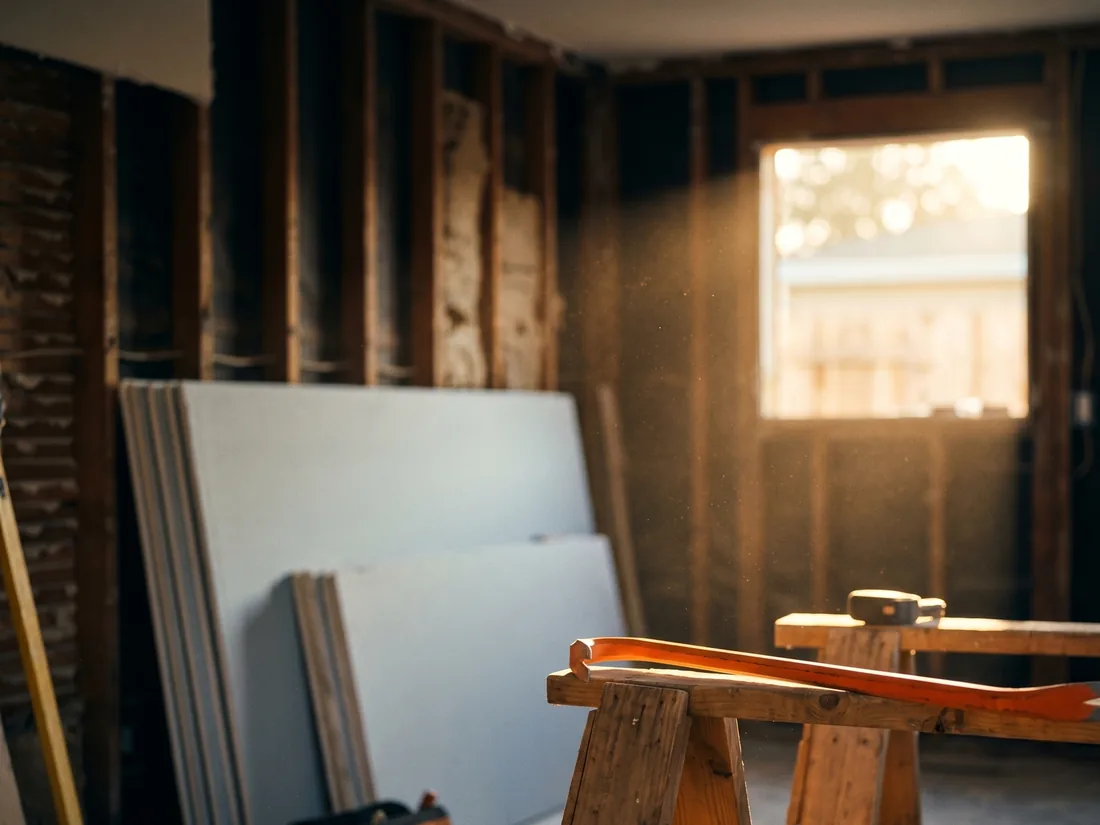
The newer remodeling-focused license, built for contractors who work on existing homes rather than ground-up builds. A B-2 covers improvements, repairs, and renovations that use at least three unrelated trades, think a kitchen or whole-home remodel, without the full Class B scope.
The exam leans on what's different about remodel work: tying new work into old construction, demo and disposal, dealing with what you find behind the walls, and the contract and disclosure rules that protect homeowners on improvement jobs. Expect the same Law & Business backbone as the B, applied to remodels.
Heads-up: the B-2 scope and trade-count rules are specific and have changed in recent years.
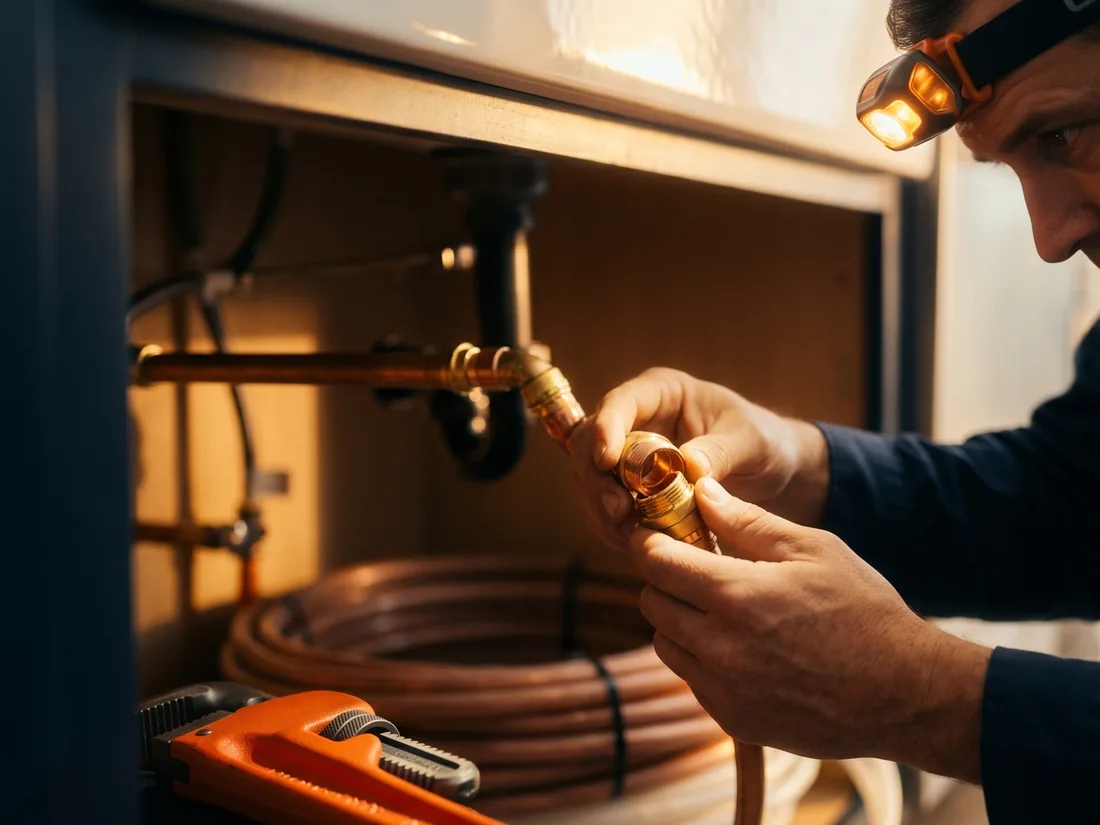
A specialty license for installing, repairing, and servicing plumbing systems: water supply, drain-waste-vent, gas, fixtures, and water heaters. If your day is pipe, fittings, and fixtures, this is your classification.
This exam is heavy on exact numbers, and those numbers are exactly what it likes to flip into trick questions. Drain slopes, vent sizing and distances, fixture-unit counts, backflow protection, and gas pressures all have specific code values you're expected to know cold. Get the units right and the trick questions get a lot easier.
Note: California plumbing rules can differ from the national model code. We teach the California version.
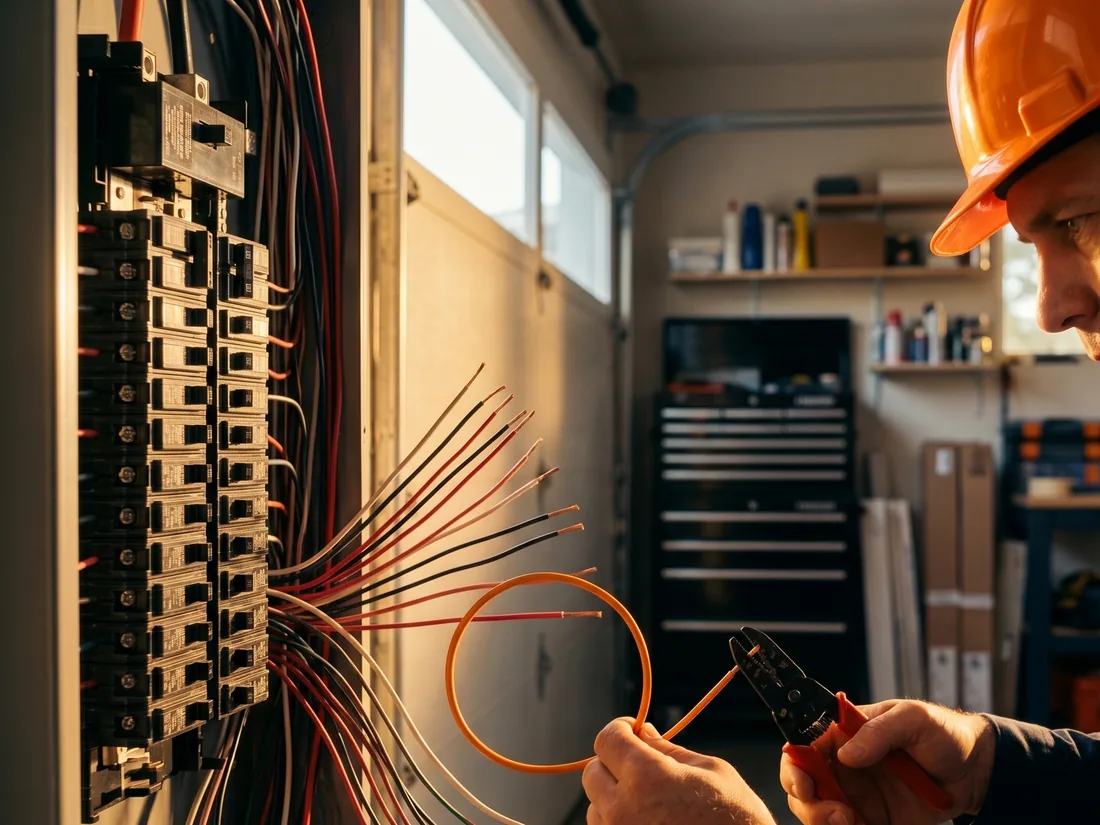
The specialty license for electrical work: wiring, services, panels, circuits, and fixtures for residential and commercial jobs. It's one of the most popular C classifications, and one of the most math-heavy exams.
Expect a lot of load calculations, conductor and conduit sizing, grounding and bonding, and code-table lookups. The math is unforgiving and the code is specific, which is exactly what flashcards and timed drills are built for. Knowing where a value comes from matters as much as the value itself.
Safety counts double here. Cal/OSHA and electrical-safety items show up on the exam and on the job.
No surprises. Here's how the day runs, so the only thing you're thinking about is the questions.
You test at a PSI center on a computer. There are testing sites across California. Both exams are taken the same day, one after the other.
A valid government photo ID that matches your application name, and your scheduling notice. That's it. The exam is closed book, no notes, no phone.
An on-screen calculator and scratch material are provided, so you don't need to bring your own. You won't get the code book, the numbers have to be in your head.
Because it's computer-based, you get a pass or fail report before you leave. No waiting weeks to find out.
You can retake the failed exam after a short waiting period (about 21 days), with a retake fee. Use the topic breakdown on your fail report to focus.
Once approved, you generally have 18 months to pass both exams, and a passed exam stays valid for up to five years while you finish the other.
From the day you mail your application to the day you can pull permits, plan for a few months. Here's a typical path. Yours will vary with CSLB's workload and how fast you study.
Gather your experience proof, complete the application, and submit it with the $450 fee.
CSLB reviews your eligibility. Online applications usually move faster than mailed ones.
This is the window to drill. Most people get exam-ready in a few weeks of short, daily sessions, so you're green before your test date arrives.
Once approved, schedule with PSI and sit both exams the same day. Results are immediate.
Fingerprinting, the asbestos exam, your bond, and the license fee. Then your number is issued, often within a couple of weeks of passing.
Bottom line: plan for roughly three to six months start to finish, with the studying being the part you control.
You don't have a free month. You have lunch breaks, drive time, and an hour after dinner. Here's how to use them.
Don't reread what you already know. Our smart learning system keeps the cards you miss in rotation and focuses your time and energy on the places you need to focus, so every minute pays you back.
Most missed questions aren't about knowledge, they're about trick wording. "All of the following except," absolute words, two answers that are almost identical. Practice tests and exam tips train you to be ready.
Running out of time fails more people than not knowing the material. Take timed tests early so the pace feels normal on exam day. License Ladder automatically gets you ready with the right practice.
Roughly half of unprepared applicants fail their first attempt. The reasons are predictable, which means they're avoidable.
Skilled tradespeople breeze past the trade exam and get blindsided by contracts, liens, and payroll law. Half your license has nothing to do with your tools. Give it equal time.
They've never practiced under the clock, so they burn minutes on early questions and rush the end. Timed practice fixes this completely.
"Except," "always," "never," and two nearly identical answers cost easy points. Knowing the patterns is half the battle.
Down-payment caps, lien deadlines, slopes, loads, and clearances are exact. "Close enough" is wrong on a multiple-choice exam. Memorize the figures cold.
The fix for every one of these is the same: active recall and timed practice, which is exactly what the bundle is built around.
The exam loves exact figures. These come up again and again across the Law & Business exam. Learn them cold.
Every number on this list is on a card. Drill them until they're reflex.
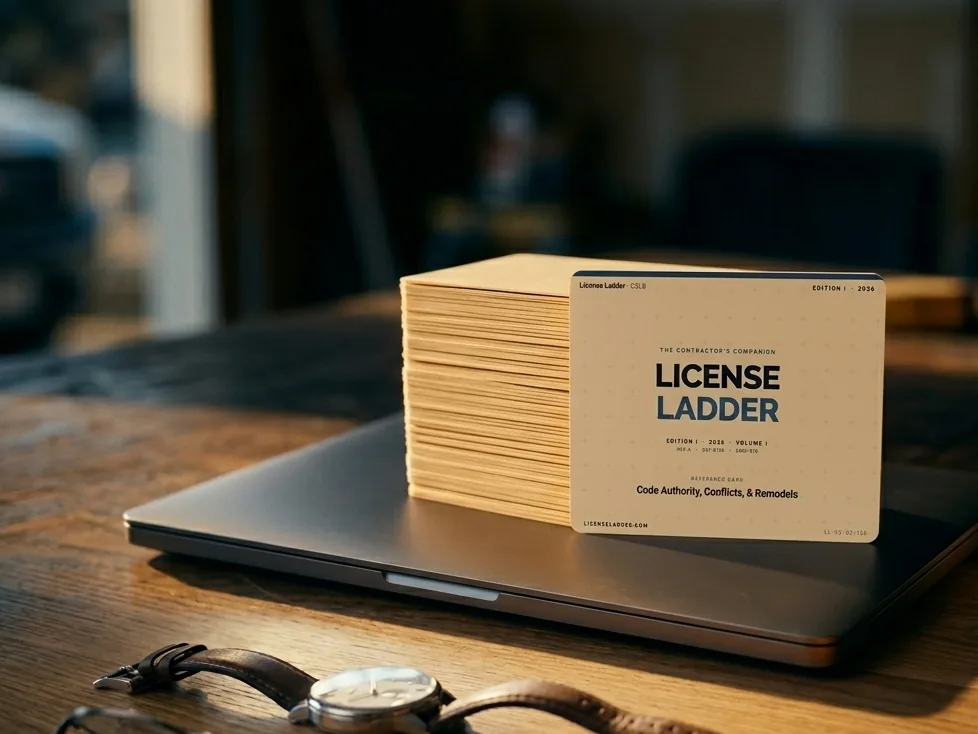
Get the deck · $89This is exactly what a License Ladder card looks like, the question the way the exam asks it, the answer in plain English, and the number that matters.
On a home-improvement contract, how much can you legally collect as a down payment?
The lesser of 10% of the contract price or $1,000, whichever is smaller. So even on a $90,000 remodel, your down payment is capped at $1,000.
What's the minimum slope for a horizontal drain pipe under 3 inches?
¼ inch of fall per foot. Less than that and waste won't clear; more is fine for small lines. California plumbing code sets this minimum so drains self-scour.
What's the standard general-lighting load for a dwelling?
3 volt-amperes per square foot. Multiply the square footage to size the service.
How long do you have to record a mechanics lien after completion?
Generally within 90 days of completion, sooner if a notice of completion is filed.
Watch for: "all of the following are required except…"
Read the except, the answer is the one that doesn't belong. The exam buries easy points in backwards wording.
Passing the exams is the milestone, but a few steps still stand between you and a live license number.
File your $25,000 contractor bond with CSLB. A surety company issues it; your annual premium depends on your credit. This protects your customers and is required to activate.
If you'll have employees, you need workers' compensation insurance. A few classifications must carry it even with no employees. File the right form so CSLB can activate you.
Pay the initial license fee ($200 sole owner, $350 otherwise). Once everything clears, your license number is issued and you're legal to contract and pull permits.
Renew your active license every two years, keep your bond and insurance current, and put your license number on your contracts, ads, and trucks as the law requires.
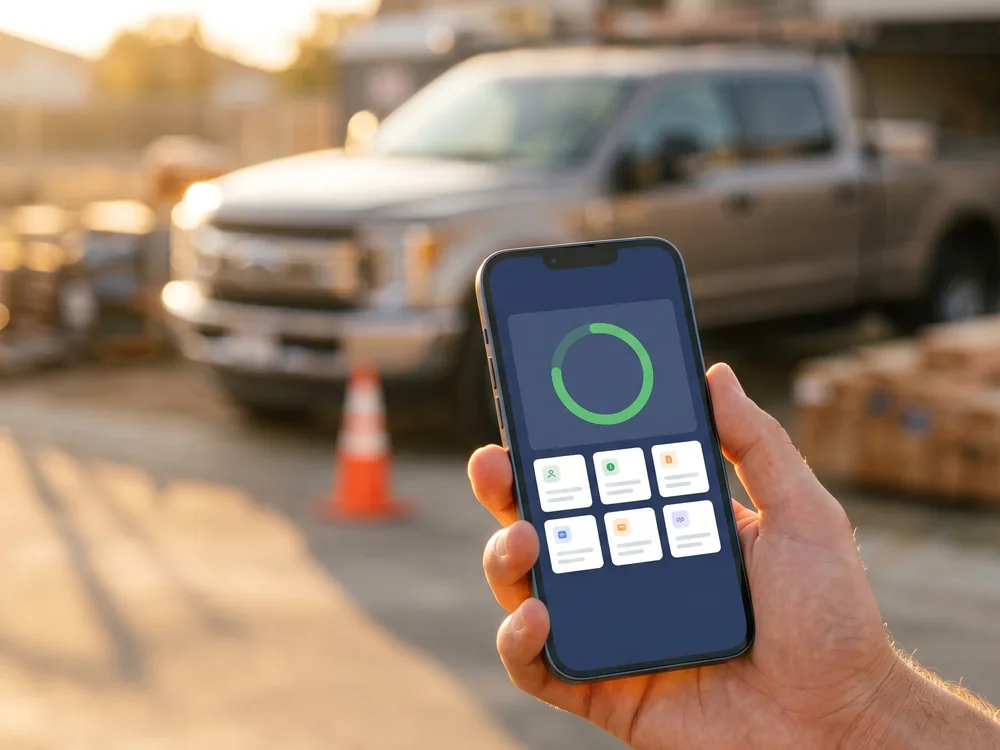
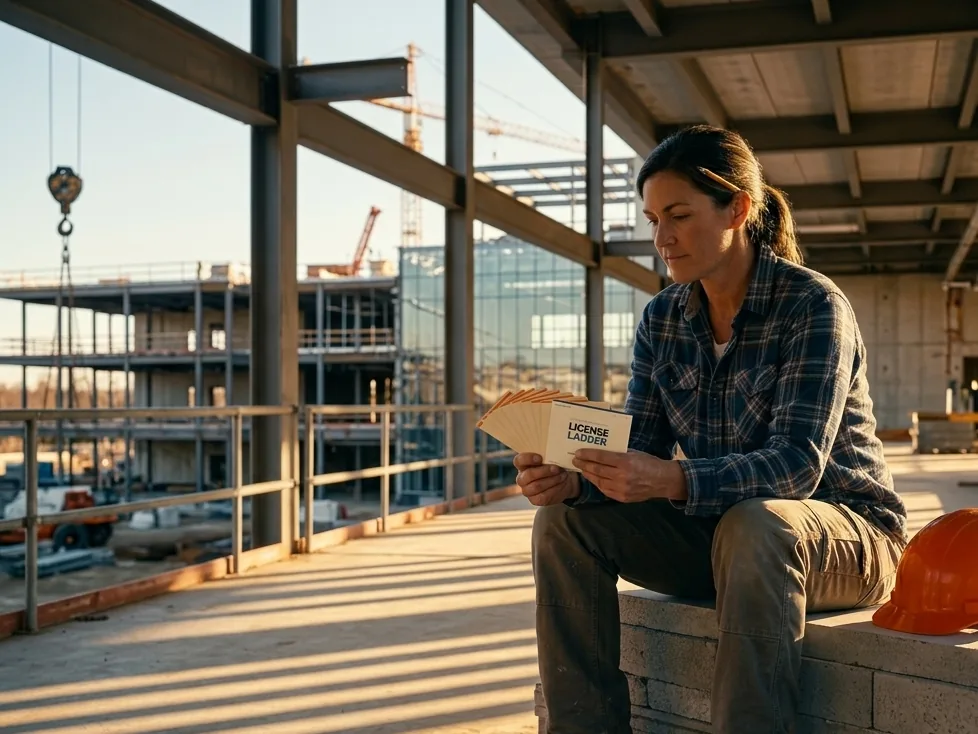
Add photos of the printed cards, the study guides, and the app in use.
The cards, the guides, and the app, built around how you actually learn. One bundle, $89, a fifth of what the old exam schools charge.